Tag: Greek Islands Guide

  • Ionian Islands: The Seven Jewels of the Emerald Sea

    Ionian Islands: The Seven Jewels of the Emerald Sea

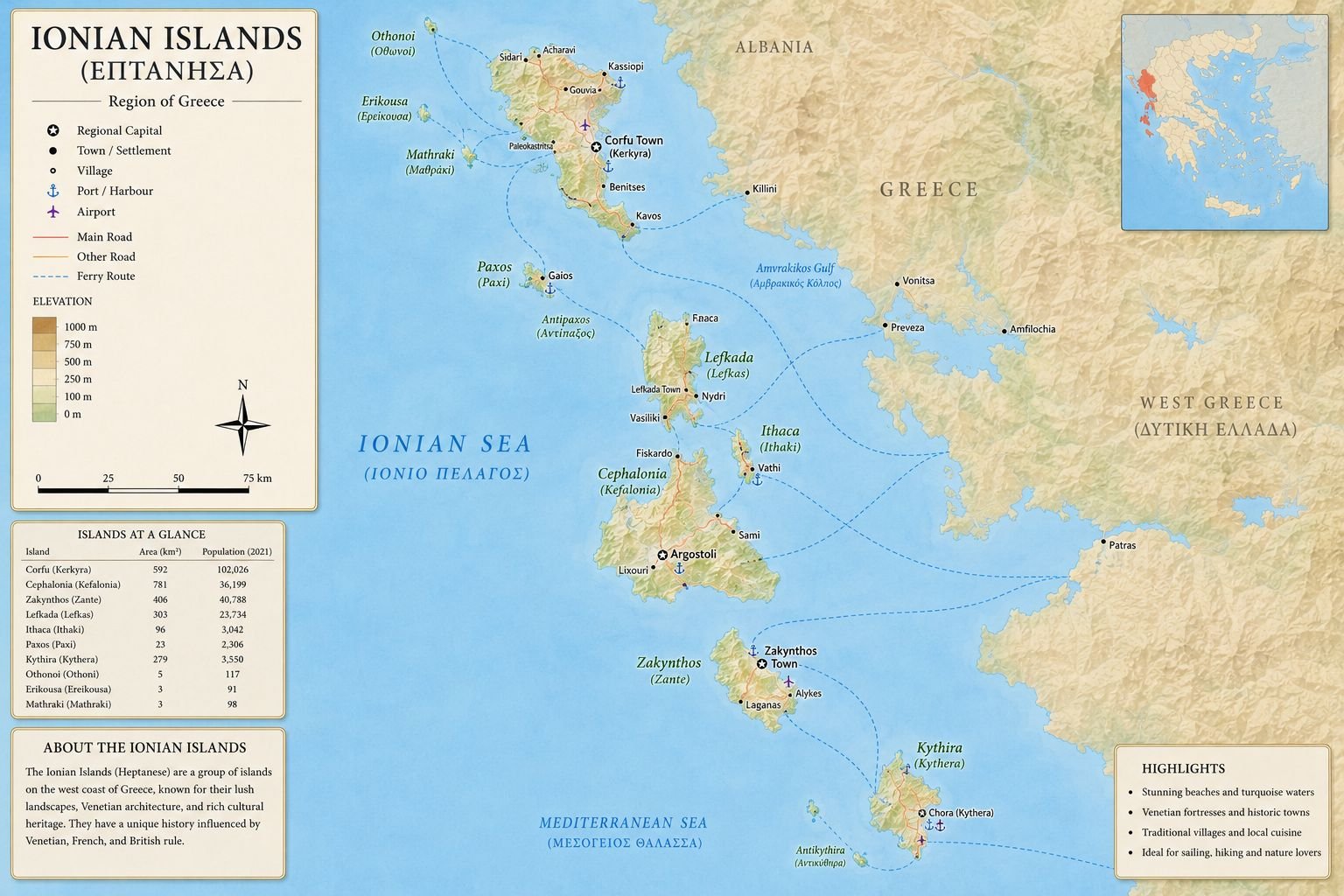
    Of all the Grecian archipelagos, the Ionian Islands are the most emerald, the most romantic, and arguably the most distinct. Stretched like a string of seven jewels down the western coast of Greece, this region – known in Greek as Eptánisa (The Seven Islands) – offers a travel experience far removed from the stark, sun-bleached drama of the Cyclades. Here, dramatic limestone cliffs plunge into turquoise waters, Venetian architecture lines marble-paved alleys, and the landscape is so lush with olive, cypress, and pine that Homer himself called it “the floating forest.”

    This is your complete guide to the Ionian Islands region: Corfu, Paxos, Lefkada, Ithaca, Kefalonia, Zakynthos, and Kythira.


    CORFU (Kerkyra): The Opulent Venetian Lady

    Corfu is the gateway to the Ionians, served by an international airport and a major ferry port. The island’s capital, also called Corfu Town, is a UNESCO World Heritage site – a living museum of Venetian, French, and British influences.

    • Must-See: The two imposing fortresses flanking the old town; the Liston arcade (a French-style café hub); the Palace of St. Michael and St. George; and Spianada Square, the largest square in Greece.
    • Natural Beauty: Paleokastritsa Monastery sits on a breathtaking bay of six coves. For a unique swim, head to Canal d’Amour (Channel of Love) in Sidari, where smooth sandstone channels create natural pools.
    • Tip: Rent a car to explore the interior villages like Pelekas, where Kaiser’s Throne offers a panoramic sunset over the entire island.

    PAXOS & ANTIPAXOS: The Quiet Aristocrats

    A short hydrofoil ride south of Corfu, Paxos is for those seeking serenity. It’s a low, olive-covered island with no airport, meaning crowds are minimal.

    • Must-See: The eerie, spectacular sea caves of Erimitis and the blue grottoes of Ortholithos. Take a day boat to Gaios, the main port, with its tiny islets (Panagia and Agios Nikolaos) guarding the harbor.
    • Antipaxos: A five-minute taxi-boat ride away, this tiny isle is famous for two things: its own wineries producing light red wine, and Voutoumi Beach – a crescent of white sand lapped by water so clear it looks like liquid sapphire.
    • Tip: Book a private boat tour from Gaios harbor. The captains know every hidden cove.

    LEFKADA: The Windsurfer’s Paradise

    Unlike its sisters, Lefkada is a former peninsula – a narrow drawbridge connects it to the mainland. This makes it easily accessible but no less spectacular. It’s the island of vertiginous cliffs and blinding white beaches.

    • Must-See: Porto Katsiki and Egremni – two of the most photographed beaches in the world. You descend hundreds of steps to reach sands backed by stark white chalk cliffs. For windsurfing, Vasiliki is a world-class mecca thanks to daily afternoon thermal winds.
    • Inland: Visit the Dimosari Waterfalls, a cold, refreshing plunge pool accessible via a short hike through a gorge.
    • Tip: Arrive at Porto Katsiki before 9:00 AM in July/August to secure parking and a sunbed. For a quieter alternative, try Kathisma Beach.

    ITHACA: The Legendary Homeland

    Ithaca is small, mountainous, and spiritually powerful – forever linked to Homer’s Odysseus. It has no airport and limited ferry service, which preserves its raw, authentic soul.

    • Must-See: The Archaeological Museum of Vathy (the island’s charming capital); the Cave of the Nymphs (where Odysseus supposedly hid the Phaeacians’ gifts); and the ruins of a Hellenistic triple-tiered cistern called Arethousa.
    • Walking: Ithaca is a hiker’s dream. The trail from Stavros to the School of Homer (a Mycenaean-era site) offers views over the channel to Kefalonia.
    • Tip: Don’t expect nightlife. Come here for swimming in secluded coves like Gidaki (accessible by boat or a steep 30-minute hike) and reading under olive trees.

    KEFALONIA: The Big, Bold Beauty

    The largest of the Ionians, Kefalonia is an island of massive scale – deep gorges, giant caves, and grand views. It was made famous by the novel and film Captain Corelli’s Mandolin.

    • Must-See: Melissani Cave Lake – a surreal, partially collapsed cavern where you float on a boat under a shaft of sunlight that turns the water electric blue. Then, nearby, Drogarati Cave with incredible acoustics (it’s used as a classical music venue). Finally, Myrtos Beach – a dramatic sweep of white pebbles between vertical karst mountains.
    • Fishing Villages: Fiscardo in the north survived the 1953 earthquake that rebuilt most of the island. Its pastel Venetian houses now host elegant yachts and fine seafood tavernas.
    • Tip: Drive across the island’s spine to the Ainos National Park, home to the endangered wild horse and endemic fir trees – it feels like the Alps above the sea.

    ZAKYNTHOS (Zante): The Marine Guardian

    Zakynthos is famous for two things: the most jaw-dropping shipwreck beach in the world, and its role as a nesting ground for the endangered loggerhead sea turtle (Caretta caretta).

    • Must-See: Navagio (Shipwreck) Beach. You can only see it from the viewing platform on the cliff (arrive early to beat bus tours) or arrive by boat – the rusty smuggler’s ship on blinding white sand is an unforgettable sight.
    • Conservation: The southern beaches of Laganas Bay, particularly Sekania and Marathonisi (Turtle Island), are protected zones. You can take legal turtle-spotting tours but must follow strict rules (no flash photography, maintain distance).
    • Blue Caves: On the northern tip, these vertical, sea-eroded grottos are best explored by small boat – the water inside glows deep cobalt.
    • Tip: The town of Zakynthos has a charming central square (Solomos Square) and a Venetian castle on the hill. For nightlife, Laganas is the party epicenter – avoid it if you seek peace.

    KYTHIRA: The Distant Cousin

    Set far to the south, almost midway between the Peloponnese and Crete, Kythira is often forgotten but beloved by those who find it. It’s fertile, windswept, and full of Byzantine castles and waterfalls that flow directly into the sea.

    • Must-See: The Venetian fortress of Chora (the capital), perched on a rocky headland, and the nearby Fonissa Waterfall – a multi-tiered cascade that ends in a freshwater swimming hole. Also, the cave at Agia Sofia with stalactites and ancient Christian frescoes.
    • Tip: Kythira’s airport is inconsistent; most visitors arrive by ferry from Neapoli (Peloponnese) or Antikythera. Rent a 4×4 – the roads to remote beaches like Fyri Ammos are rough.

    PRACTICAL TRAVEL INFORMATION

    Best Time to Visit: May-June and September-October are ideal. The sea is warm, the crowds are gone, and the sun is potent but not scorching. July-August is peak season – ferries book out, hotels double in price, and beaches are packed.

    Getting There & Around:

    • By Air: International airports on Corfu (CFU), Kefalonia (EFL), Zakynthos (ZTH), and Aktio (near Lefkada, PVK). Seasonal direct flights from most major European cities.
    • By Ferry: Regular car ferries connect the islands to each other and to the mainland ports of Igoumenitsa, Patras, and Kyllini. The “Ionian Islands” route makes a great island-hopping itinerary, though note that Kythira is on a separate southern loop.
    • On the Islands: Car or scooter rental is essential outside the main towns. Bus services exist but are infrequent and mostly for school routes.

    Food & Drink (What to Eat):

    • Bourdeto: A fiery, red spicy fish stew (a Venetian legacy).
    • Pastitsada: Corfu’s signature – rooster or veal cooked in a rich tomato sauce with cinnamon, cloves, and garlic, served over thick pasta.
    • Strapatsada: Scrambled eggs with fresh tomatoes, feta, and oregano – a perfect breakfast.
    • Mantoles: Almond brittle candies popular in Kefalonia.
    • Wine: Try the dry white Robola from Kefalonia’s mountain vineyards, or the sweet red Mavrodafne of Zakynthos.
    • Olive Oil: The Ionian forests produce some of Greece’s most buttery, mild extra virgin olive oil. Buy a tin.

    Cultural Etiquette & Tips:

    • Nudity: Officially illegal on all public beaches in Greece. Tolerated on isolated coves, but never near turtle nesting zones (rangers are active on Zakynthos).
    • Siesta: Between 15:00 and 17:00, many shops and some tavernas close. Use this time to nap or swim.
    • Caretta-Caretta: On Zakynthos, do not use white lights on the beach after dark (they disorient hatchlings). Use the red-filter setting on headlamps.
    • Earthquake Awareness: The Ionians are seismically active. Your accommodation will have a safety card – read it. That said, modern buildings are earthquake-resilient.

    SAMPLE 10-DAY ISLAND-HOPPING ITINERARY

    • Days 1-3: Fly into Corfu. Explore Corfu Town. Day trip to Paleokastritsa and Canal d’Amour.
    • Day 4: Morning hydrofoil to Paxos (1 hr). Overnight in Gaios. Swim at AntiPaxos.
    • Day 5: Hydrofoil to Lefkada (via Igoumenitsa, approx 3 hrs). Rent a car. Drive to Porto Katsiki for sunset.
    • Days 6-7: Drive to Vasiliki. Windsurf or hike to Dimosari Waterfalls. Early ferry to Kefalonia (Fiskardo).
    • Days 7-8: Kefalonia – Melissani Cave, Myrtos Beach, overnight in Fiskardo or Argostoli.
    • Day 9: Ferry to Zakynthos (2 hrs). View Navagio from the clifftop. Stay in the north for quiet, or town for history.
    • Day 10: Morning turtle-spotting tour in Laganas Bay. Fly out from Zakynthos (ZTH) via Athens or directly to a European hub.

    Note: Adding Ithaca or Kythira requires more time – save them for a second, slower trip.


    FINAL VERDICT

    The Ionian Islands region is not the Greece of whitewashed cubes and vivid blue domes. It is the Greece of wild rosemary on a hillside path, of a forgotten Venetian cannon overlooking an English-built road, of a sea so clear that your boat seems to float in air. It is softer, greener, and more emotional.

    Whether you come for the shipwreck of Zakynthos, the caves of Kefalonia, the windsurfing of Lefkada, or the quiet poetry of Ithaca, you will leave with salt in your hair and a promise to return. Because, as the local saying goes: “Once you drink the water of the Ionian, you will always hear it calling your name.”

    Safe travels – kaló taxídi.
  • Greek Islands: Sun, Sea, and Timeless Beauty

    Greek Islands: Sun, Sea, and Timeless Beauty

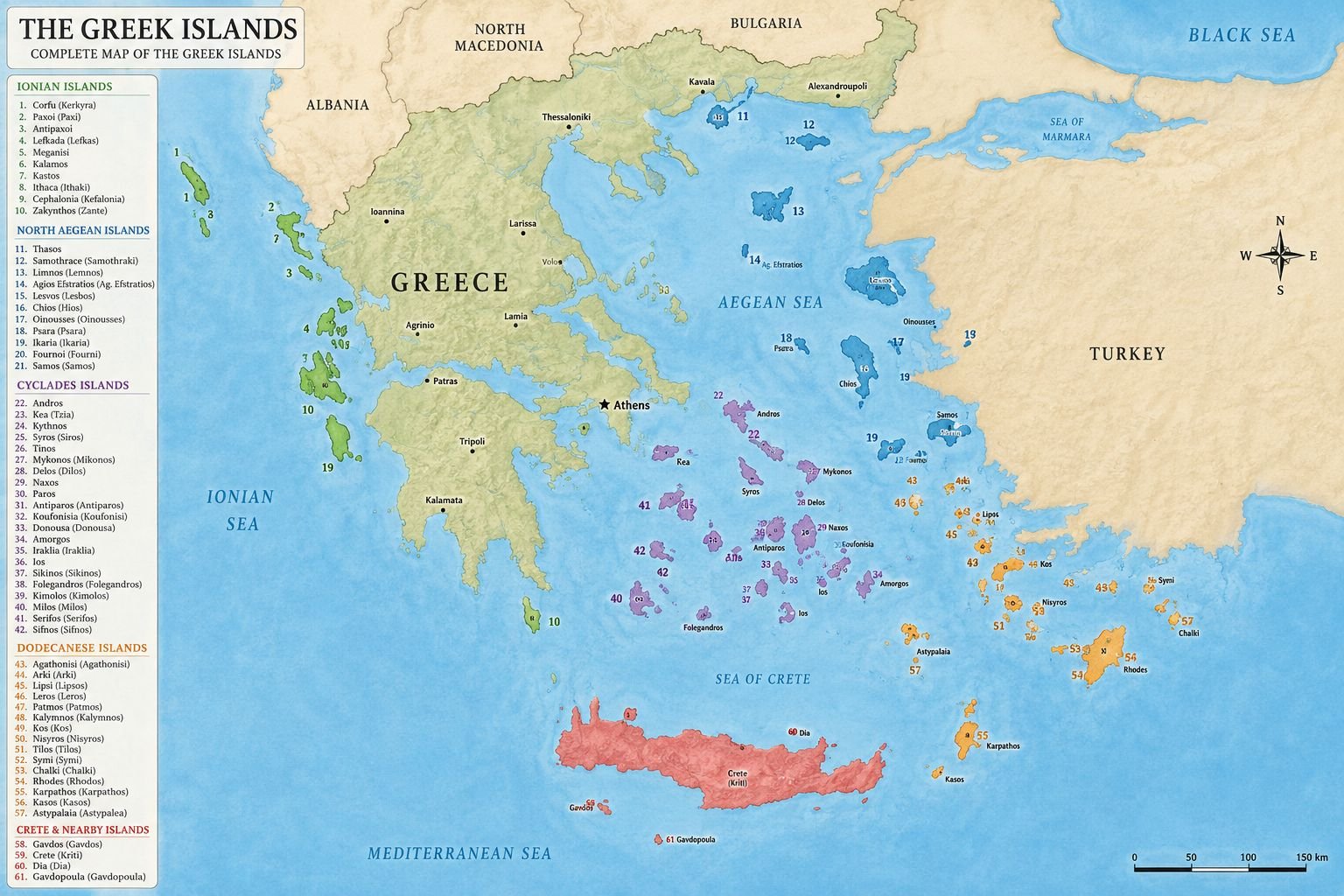
    The Greek Islands are the quintessential Mediterranean dream. Scattered like stone jewels across the Aegean and Ionian Seas, over 6,000 islands and islets form this archipelago, though only about 200 are inhabited. Each island possesses a unique character, ranging from vibrant nightlife and sandy beaches to serene monasteries and dramatic volcanic landscapes. Whether you are a history buff, a party seeker, a foodie, or a sailor, there is a Greek island waiting for you.

    When to Visit
    The best time to visit the Greek Islands is during the shoulder seasons: late spring (May to June) and early autumn (September to October). During these months, the weather is still warm and sunny (temperatures between 75°F and 85°F), the sea is pleasant for swimming, and the crowds are thinner compared to the peak summer months of July and August. Prices for flights and accommodation are also more reasonable. Winter (November to March) is very quiet, with many hotels and restaurants on the islands closing entirely.

    Getting Around
    Ferries are the lifeblood of island travel. There are two main types: slow ferries (economical and stable, great for enjoying the sea view) and high-speed catamarans (more expensive but cut travel time in half). Major hubs like Athens (Piraeus port) connect to almost all islands. For those short on time, domestic flights from Athens to islands like Santorini, Mykonos, or Crete are available.

    Top Island Destinations

    1. Santorini (Thira) – The Volcanic Gem
      Best for: Stunning sunsets, romantic getaways, and geology.
      Santorini is arguably the most famous Greek island. Its dramatic landscape is the result of a massive volcanic eruption that left a caldera—a vast sea-filled crater surrounded by towering cliffs. The main towns of Fira and Oia cling to these cliffs, offering breathtaking views. The white-washed buildings with blue domes are iconic.
      Must-Do: Watch the sunset in Oia (go early to secure a spot). Visit the Red Beach and the ancient site of Akrotiri, a Minoan Bronze Age settlement preserved in volcanic ash, often called the “Greek Pompeii.”
      Local Flavor: Drink Assyrtiko wine, a crisp white grape grown on volcanic soil. Visit a winery in the village of Megalochori.
    2. Mykonos – The Glamorous Party Hub
      Best for: Nightlife, beaches, and cosmopolitan vibes.
      Mykonos is known for its chic atmosphere, attracting celebrities and travelers looking for high-energy fun. The main town, Chora, is a labyrinth of whitewashed alleys filled with designer shops, fine dining, and bars. The iconic windmills and the church of Paraportiani are must-see landmarks.
      Must-Do: Spend a day at Paradise or Super Paradise Beach, which transform from relaxing day clubs into famous party venues. For a quieter day, head to Agios Sostis Beach.
      Insider Tip: If you are not a party person, visit Mykonos in late September when the crowds dissipate but the weather remains beautiful.
    3. Crete – The Large and Diverse Island
      Best for: History, hiking, and authentic culture.
      Crete is the largest Greek island, so vast that it feels like its own country. It has it all: the Minoan Palace of Knossos (connected to the legend of the Minotaur), the stunning Samaria Gorge (a 16km hike through a national park), and beautiful cities like Chania with its Venetian harbor.
      Must-Do: Hike the Samaria Gorge (open May to October) – it’s challenging but rewarding. Visit the pink-sand beach of Elafonisi and the lagoon of Balos.
      Local Flavor: Try Dakos (a Cretan barley rusk topped with tomato and mizithra cheese) and authentic lamb with stamnagathi (wild greens).
    4. Rhodes – The Medieval Fortress
      Best for: History and family-friendly resorts.
      Located in the Dodecanese, Rhodes is famous for its medieval old town, a UNESCO World Heritage Site. Walk along the Street of the Knights and enter the Palace of the Grand Master, and you’ll feel like you have stepped back into the time of the Crusades.
      Must-Do: Visit the Valley of the Butterflies (Petaloudes) in summer. Take a day trip to the ancient ruins of Kamiros or the acropolis of Lindos, which sits dramatically above a sandy beach.
      Activities: The east coast offers excellent windsurfing and kite-surfing.
    5. Corfu – The Green Island
      Best for: Lush scenery and Venetian charm.
      Corfu, in the Ionian Sea, is radically different from the Cyclades. It is incredibly green, covered in olive groves, cypress trees, and blooming flowers. Its architecture is heavily influenced by Venetian, French, and British rule. The capital, Corfu Town, has two impressive fortresses and arcaded French-style avenues.
      Must-Do: Explore the Paleokastritsa Monastery and the nearby stunning bays for kayaking and snorkeling. Take a trip to the Canal d’Amour (Channel of Love) in Sidari, where legend says swimming through the channel will lead you to your true love.
    6. Naxos – The Underrated Foodie Haven
      Best for: Families, windsurfing, and authentic villages.
      Often overshadowed by Mykonos and Santorini, Naxos is a favorite among savvy travelers. It has fantastic beaches (Agios Prokopios is world-class), a towering ancient Portara gate (the entrance to an unfinished temple), and mountain villages that produce famous potatoes and cheeses.
      Must-Do: Rent a car and drive into the mountainous interior to visit the village of Apiranthos (the “marble village”) and the Kitron liqueur distillery in Halki.
      Beach Tip: Mikri Vigla offers shallow water for families and strong winds for kite-surfers and windsurfers.

    Essential Tips for Travelers

    • Packing: Bring light, breathable fabrics, good walking sandals (the streets are cobbled), a sunhat, and high-SPF sunscreen. If you plan to visit monasteries or churches, women should bring a scarf or wrap to cover shoulders.
    • Cash vs. Card: While cards are accepted in hotels and larger restaurants, many smaller tavernas, cafes, and beach bars operate on a cash-only basis. Always carry some euros.
    • Slow Down: Embrace “Siga, Siga” (slowly, slowly). Meals last for hours, and rushing is considered rude. Afternoon naps (siestas) are common; many shops close from 2:30 PM to 5:30 PM.
    • Island Hopping: Do not try to see too many islands in one week. A good rule is 2-3 islands for a 10-day trip. Choose islands that are close geographically to avoid losing full days to travel.

    Sample 10-Day Itinerary
    Day 1-3: Fly into Athens, take a high-speed ferry to Santorini. Explore Fira, hike from Fira to Oia, watch the sunset.
    Day 4-6: Ferry to Naxos (2 hours). Relax on Agios Prokopios beach, explore the old town and the Portara, eat local cheese.
    Day 7-9: Ferry to Mykonos (1 hour) for nightlife and glamour. Visit the windmills, and enjoy a beach club day.
    Day 10: Ferry back to Athens for your flight home.

    Conclusion
    The Greek Islands are more than just a postcard. They are a sensory experience: the taste of fresh feta and oregano, the sight of the setting sun turning the sea to gold, the feel of cool marble ruins under hot fingers, and the sound of waves lapping against a boat. Whether you seek adventure, romance, or simple relaxation under an olive tree, the Greek Islands promise a journey that will stay with you long after the tan fades.

  • A Journey to Greece’s Unforgettable North Aegean Islands

    A Journey to Greece’s Unforgettable North Aegean Islands

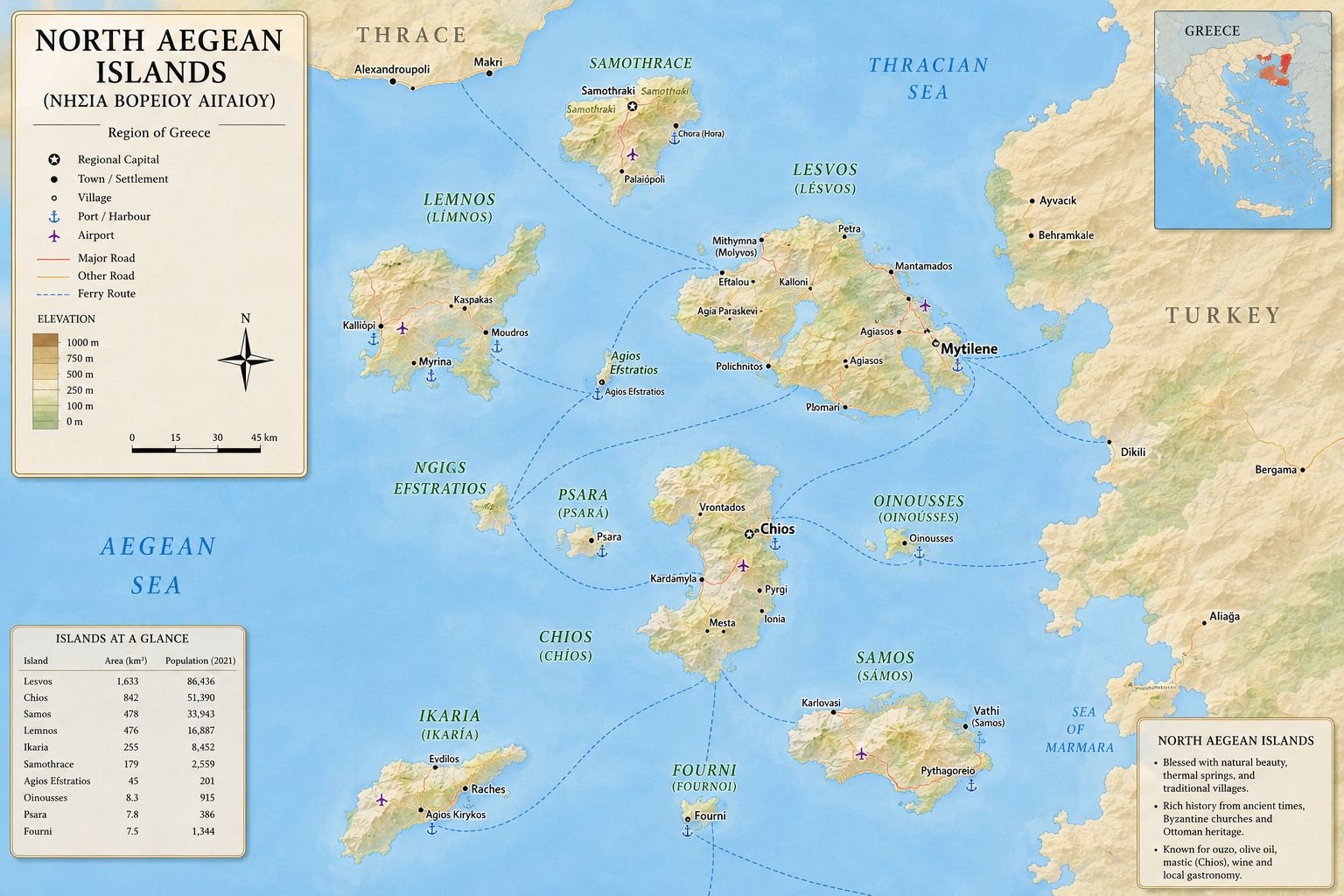
    When travelers dream of Greece, they often picture the whitewashed buildings of Santorini, the buzzing nightlife of Mykonos, or the historic landmarks of Crete. But for those seeking a deeper, more authentic, and dramatically beautiful experience, the North Aegean region offers a world apart. Scattered like ancient jewels in the northeastern corner of the Aegean Sea, close to the coast of Asia Minor, lie the islands of the North Aegean: Ikaria, Samos, Chios, Lesvos (Lesbos), Lemnos, and the lesser-known Agios Efstratios. These are islands of wild mountains, deep history, unique local traditions, and a slower, more profound rhythm of life.

    This region is not about packaged luxury or crowded beaches. It is a destination for explorers, hikers, foodies, and spiritual seekers. It is a place where you can bathe in therapeutic radioactive springs, hike through petrified forests, taste some of the finest ouzo in the world, and dance at all-night panigyria (traditional festivals) that have remained unchanged for centuries.

    Let us embark on a detailed journey through the distinct character of each major island in this captivating region.

    Island 1: Samos – The Green Paradise of Hera & Pythagoras

    Samos, just a mile from the Turkish coast, is a lush, mountainous island known as the birthplace of the philosopher Pythagoras and the mathematician Epicurus. Its fertile valleys are covered in vineyards producing the sweet, world-famous Muscat wine.

    Top Attractions & Activities:

    The Tunnel of Eupalinos: An engineering marvel from the 6th century BC, this is a 1,036-meter-long tunnel carved through a mountain to supply the ancient city with water. You can actually walk through a portion of it.

    Heraion of Samos: A UNESCO World Heritage site, this massive ancient sanctuary dedicated to the goddess Hera was one of the most important religious centers of the ancient Greek world.

    Pythagoreion: The ancient, fortified port of Samos, now a charming town with a beautiful harbor lined with seafood tavernas.

    Vathy: The island’s modern capital, a picturesque town with a fascinating archaeological museum housing the famous “Kouros of Samos,” a 5.5-meter marble statue.

    Beaches: For organized swimming, head to Tsamadou or Kokkari. For a wilder experience, seek out the remote pebble beach of Mikali or the dramatic Mykali Bay.

    Travel Tip: Rent a car or scooter. The island is large and mountainous, and the best coves and mountain villages are off the main roads. Do not miss a wine tasting at a local winery.

    Island 2: Ikaria – Where People Forget to Die

    Ikaria is world-famous for one thing above all: longevity. It is one of the world’s five “Blue Zones,” where a strikingly high percentage of the population lives past 90. Their secret? A slow pace of life, a strong sense of community, a Mediterranean diet, and the habit of drinking herbal mountain tea. Ikaria has its own time zone—”Ikarian Time,” which essentially means never being in a hurry.

    Top Attractions & Activities:

    Therma (Agios Kirykos): The island’s capital is famous for its radioactive thermal springs, believed to alleviate arthritis and skin conditions. The spa town has several public baths.

    The Castle of Koskina: A medieval fortress offering incredible views over the island and the sea.

    Seychelles Beach: A stunning, remote cove with turquoise water and large white pebbles, accessed via a steep, unpaved road followed by a short climb. It is well worth the effort.

    Panigyria (Traditional Festivals): From Easter to October, villages take turns hosting all-night festivals honoring a saint. There is spontaneous Greek dancing, unlimited wine, and roasted goat. This is the soul of Ikaria.

    Travel Tip: Do not plan a rigid itinerary. You will get frustrated. Embrace the slow pace. Stay in a traditional guesthouse in a mountain village like Christos Raches to experience real Ikarian life. Try the local red wine, which is rich in antioxidants.

    Island 3: Lesvos (Lesbos) – The Muse of Poets & Olive Groves

    Lesvos is the third-largest Greek island, a sprawling land of two “bays” creating a shape like a leaf. It is the birthplace of the ancient poet Sappho and, today, a place of immense natural beauty and cultural heritage. It is covered in an estimated 11 million olive trees, producing exceptional olive oil.

    Top Attractions & Activities:

    The Petrified Forest of Sigri: A UNESCO Global Geopark. Millions of years ago, volcanic ash covered a forest, turning the trees into stunning fossils. The park and nearby Natural History Museum are unforgettable.

    Molyvos (Mithymna): One of the most beautiful medieval towns in Greece. A hilltop Genoese castle dominates a cascade of stone houses and red-tiled roofs leading down to a charming harbor. The sunset from the castle walls is magical.

    Ouzo Distilleries: The island is the spiritual home of ouzo. Take a tour of a traditional distillery in the town of Plomari, where you can see the copper stills and taste the anise-flavored spirit alongside fresh seafood.

    The Roman Aqueduct of Moria: A striking, 170-arch, 2.5 km-long aqueduct just outside the capital, Mytilene. It is a majestic sight, especially at sunset.

    Travel Tip: Lesvos is large; you will need a car. Spend time in both the north (Molyvos, Petra) and the south (Plomari, Vatera beach). The island also features a large wetland, the Kalloni Gulf, which is a paradise for birdwatchers.

    Island 4: Chios – The Island of Mastic & Medieval Villages

    Chios is an island of secrets. Its famed “mastic” (a resin from the mastic tree, known as “tears of Chios”) is a unique natural product, once as valuable as gold. The protected mastic villages in the south are a world unto themselves, built like fortresses to protect the precious harvest from pirates.

    Top Attractions & Activities:

    Mastic Villages (Mastichochoria): The villages of Pyrgi (famous for its unique black-and-white geometric sgraffito-decorated facades), Mesta (a perfectly preserved, fortified labyrinth of medieval houses), and Olympi are a living museum.

    Nea Moni Monastery: A stunning 11th-century Byzantine monastery, a UNESCO World Heritage site renowned for its exquisite golden mosaics, which rival those of Ravenna and Istanbul.

    Anavatos: A spectacularly eerie “ghost village” perched on the edge of a deep ravine. Abandoned after the 1822 massacre, it offers a haunting and powerful experience.

    Vroulidia Beach: A remote, pebbly cove accessible only by a winding road or a hike, known for its deep, clear blue water and dramatic cliffs.

    Travel Tip: Try “mastiha” in all its forms: the natural chewing gum, a liqueur, a spoon sweet, and in savory sauces. For a beach day, head to the long, sandy beach of Karfas or the wilder Mavra Volia, famous for its black volcanic pebbles.

    Island 5: Lemnos – The Aegean’s Wild West

    Lemnos feels different—low, sandy, and windswept, unlike the lush, mountainous neighbors. It is an island of dramatic volcanic rock formations, endless golden beaches, and important wetlands. It is also a sacred island, home to the cave sanctuary of the god Hephaestus.

    Top Attractions & Activities:

    Poliochni and Kavirio: The ruins of one of the oldest prehistoric settlements in Europe (Poliochni) and a sanctuary of the mysterious Kavirio mysteries.

    The Petrified Sand Dunes of Gomati-Lady: A unique geological phenomenon where wind and time have sculpted sandstone into mushroom-like and lunar rock formations.

    Desert of Lemnos (Ammos Beach): A surreal landscape of white sand dunes stretching along a turquoise sea near the village of Katalakko. It feels like the Sahara meeting the Aegean.

    Myrina: The island’s beautiful capital, crowned by a Venetian castle on a rocky peninsula. The harbor front is lined with excellent fish tavernas, and two fantastic beaches (Romeikos Gialos and Riha Nera) are within a 10-minute walk of the center.

    Travel Tip: Lemnos is a paradise for windsurfers (Keros Beach is a top spot) and for families, thanks to its many shallow, sandy beaches. It is also famous for its local cheese, “kalathaki” (a soft white cheese), and “flomaria” (handmade pasta).

    Practical Information for Your North Aegean Trip

    Getting There: The main islands (Samos, Chios, Lesvos, Lemnos) have airports with domestic flights from Athens (Aegean Airlines, Sky Express). There are also frequent and long ferry connections from the port of Piraeus in Athens and from the northern city of Thessaloniki. Ferries often stop at multiple islands, making island-hopping possible, though timetables can be sparse in winter.

    Best Time to Visit: May-June and September-October are ideal. The weather is warm, the sea is pleasant, and the summer crowds (which are never as bad as in the Cyclades) are gone. July and August are hot and windy, but the Meltemi wind is strong here, providing a natural air conditioning.

    Getting Around: A rental car is essential for exploring any of these islands thoroughly. Roads can be winding, but the rewards are empty beaches and authentic villages. Scooters are fine for shorter distances on flatter islands like Lemnos.

    Food & Drink: Do not miss fresh local seafood, grilled octopus, fava (yellow split pea puree), wild greens (horta), goat or lamb cooked in a wood-fired oven, and for dessert, spoon sweets (glyka koutaliou). Each island has its own special product: Samian Muscat wine, Lesvian ouzo and olive oil, Chian mastic-infused liqueur, Ikarian honey and herbal tea, and Lemnian kalathaki cheese.

    Conclusion: The Authentic Greek Experience

    The North Aegean islands are not for the casual tourist seeking a simple tan and a cocktail, though you can certainly find those things. They are for the curious traveler who wants to hear the echoes of ancient history, feel the texture of a unique culture, and taste a way of life that has resisted the tide of mass tourism.

    Here, you can hike through a petrified forest, soak in radioactive springs, wander through a labyrinthine medieval village, and dance with a 90-year-old at a festival at 2 AM. You will leave with not just a tan, but with stories, friendships, and a profound sense of having discovered the real Greece. Pack your curiosity and a sense of adventure—the North Aegean is waiting.