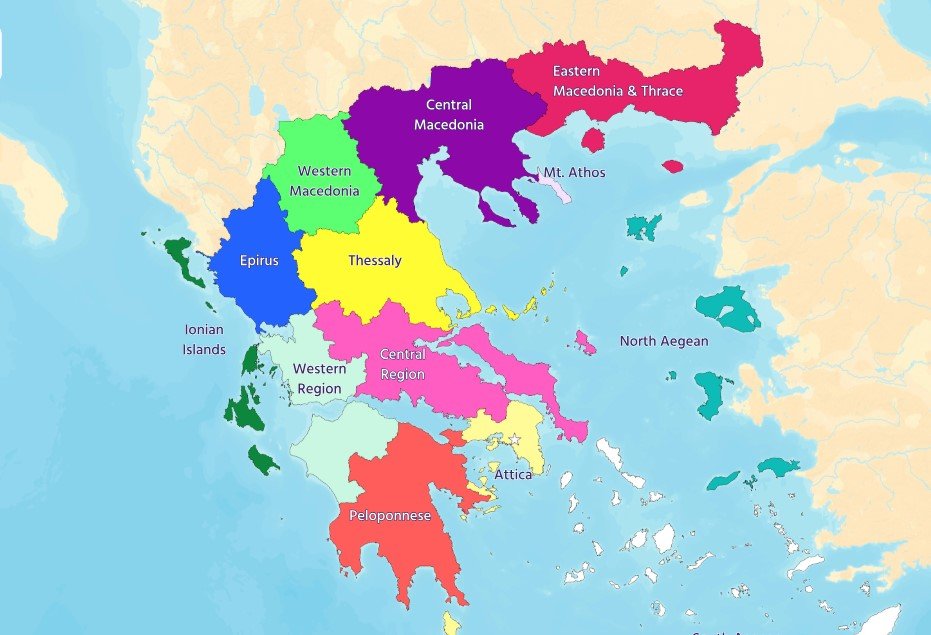
Attica is a premier administrative region of Greece encompassing the entire Athens metropolitan area, surrounding suburbs, and several Saronic Gulf islands. As the country’s most populous region and economic heart, it generates 48% of the national GDP. It features a mountainous, coastal landscape, including the Athens Riviera, and historic sites like the Acropolis and Cape Sounion.
Key Details About Attica, Greece:
Geography: A triangular peninsula in central Greece bounded by the Aegean Sea, featuring mountains like Parnitha (highest) and Hymettus, separating the plains of Pedias, Mesogeia, and Thriasian.
Regional Units: The region is divided into eight units: Central Athens, Northern Athens, Southern Athens, Western Athens, Piraeus, Islands (Hydra, Spetses, Aegina, etc.), East Attica, and West Attica.
Capital/Major Cities: Athens (capital) along with Piraeus (main port), Eleusis, Megara, and Marathon.
Economy & Culture: Responsible for nearly half of Greece’s economic activity, the region is a hub for tourism, education, and culture, housing 17 universities and numerous museums.
Governance: The region is governed by an elected regional governor, with Nikos Chardalias currently in office.
Major Attractions & Landscape
Archeological Sites: The Acropolis of Athens, Parthenon, Temple of Olympian Zeus, and Temple of Poseidon at Sounion.
Nature & Coast: The Athens Riviera offers beaches and scenic views, while Parnitha National Park provides hiking and biodiversity.
Islands: The “Islands” unit includes Hydra, Spetses, Aegina, Poros, Salamis, Angistri, Kythira, and Antikythera.
Wine/Food: Attica is known for vineyards (especially around Mesogeia) and agricultural products like olive trees.